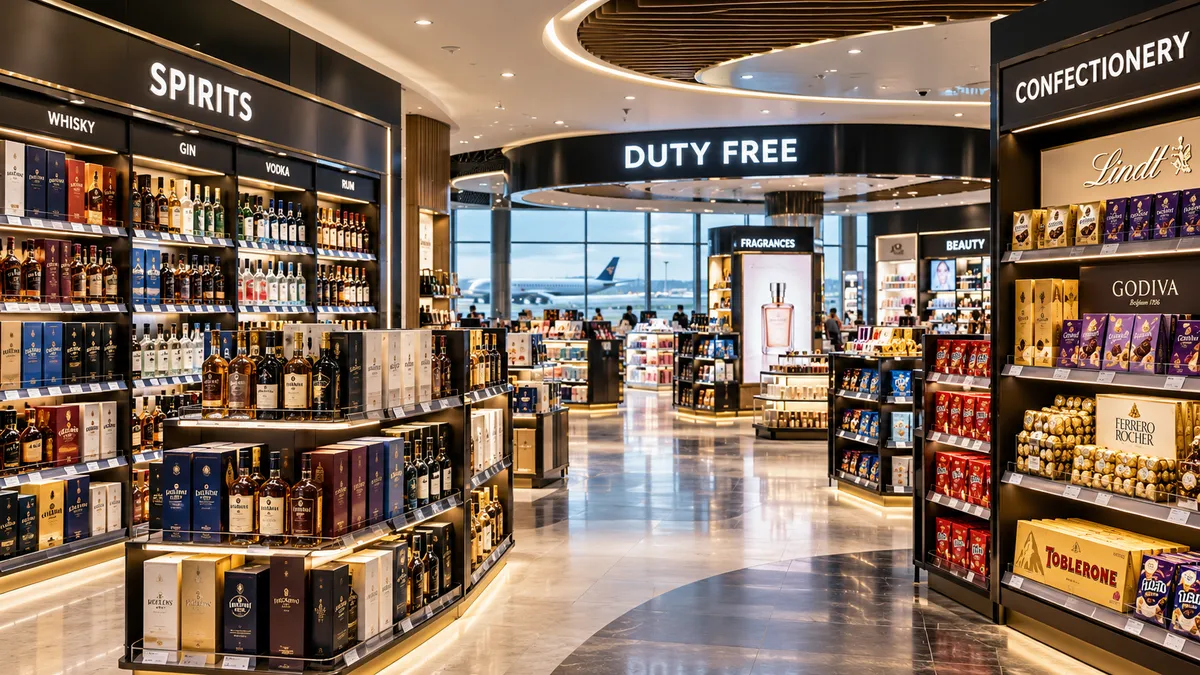
Shelftrak’s new Commercial Opportunity Analysis quantifies the potential value of closing execution gaps across space, distribution, price and promotion, helping global brands prioritise the actions with the greatest commercial impact.
Execution gaps carry different commercial consequences. A missing listing in one store may represent a greater opportunity than additional shelf space in another. For brands managing international retail networks, understanding the value of each gap is essential to deciding where to act first.
Shelftrak’s Commercial Opportunity Analysis measures execution at individual store level, benchmarks performance against comparable locations and models the potential annual retail sales value of addressing identified shortfalls. Space, distribution, price and promotion are assessed separately, giving brands a clearer view of where the largest opportunities are concentrated.
The result is a practical basis for prioritising improvements and focusing discussions with retail partners on the locations and actions most likely to deliver a commercial return.
Space allocation
Securing a listing gives a brand access to the shelf. The space it receives determines how well its range is represented. Allocation can vary considerably between stores, and a strong overall share of shelf can conceal significant shortfalls at individual locations.
Shelftrak measures linear space and share of shelf against relevant store and retailer benchmarks to identify where a brand is under-represented. This allows brands to assess allocation within the context of comparable stores rather than relying on network averages.
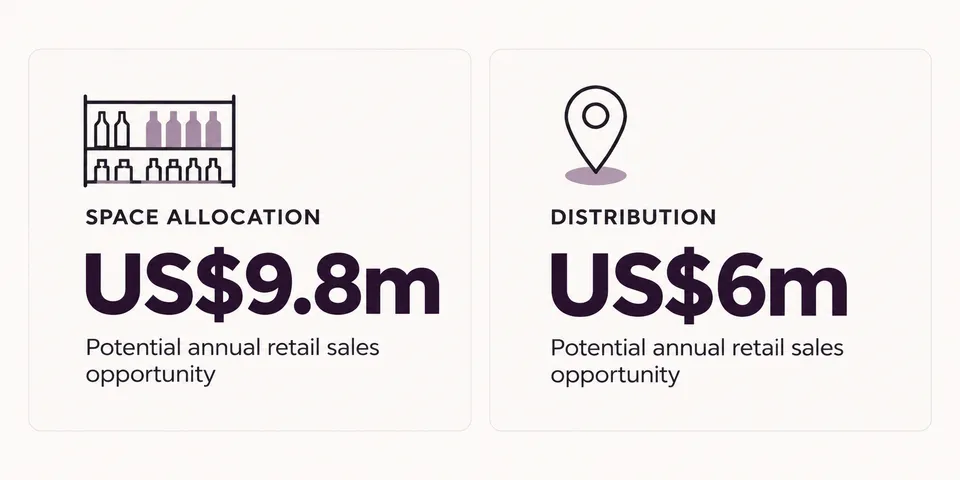
For one leading global alcohol supplier, Shelftrak identified an estimated US$9.8 million in potential annual retail sales from addressing space allocation gaps.
The analysis revealed widespread under-allocation across the audited network, including stores where the supplier’s share of category space fell substantially below that of comparable locations operated by the same retailer. These gaps pointed to a sizeable opportunity to improve shelf representation within the existing retail estate.
By showing where space falls short and estimating the value of addressing it, the analysis gives brands a stronger basis for targeted allocation discussions with retail partners.
Distribution and assortment
A brand can be present across a retailer’s network while its range remains inconsistent from store to store. Some locations carry a much narrower assortment than comparable stores, limiting shoppers’ access to relevant products and leaving potential sales unrealised.
Shelftrak compares the products stocked in individual stores with retailer-level assortment benchmarks, identifies missing listings and estimates the commercial value of closing those gaps.
For the same global alcohol supplier, the analysis revealed substantial assortment shortfalls across the audited network. The gaps showed a clear opportunity to strengthen the range within stores where the supplier already had an established presence.
Addressing these distribution gaps represented an estimated US$6 million in potential additional annual retail sales. In one airport retail location alone, a significant assortment shortfall accounted for an estimated US$410,000 annual opportunity.
This helps brands focus listing discussions on the products and locations with the greatest potential, supported by evidence from comparable stores.
Price positioning
Price inconsistencies can affect commercial performance in different ways. Products priced below relevant benchmarks may offer scope to capture more value, while an unjustified premium can make alternatives more attractive to shoppers. Each requires a different response.
Prices for identical products vary across airports and retailers. Some differences reflect local conditions, costs or commercial strategy. Others warrant closer investigation because they may weaken a brand’s positioning or leave potential revenue unrealised.
For a leading global confectionery supplier, Shelftrak identified widespread pricing below retailer benchmarks for identical SKUs. More than one-fifth of the supplier’s audited facings were priced below their own retailer’s median, indicating a material opportunity to review price consistency.
The modelling estimated approximately US$678,000 in potential additional annual retail sales from addressing the identified pricing gaps.
A benchmark gap provides a starting point for review. Any adjustment should also consider shopper demand, competitor prices and the wider category price ladder, so that the brand’s value proposition remains clear.
Shelftrak’s SKU-level analysis identifies both potential underpricing and overpricing, helping brands and retailers distinguish justified differences from inconsistencies that may be eroding value.
Promotional effectiveness
Promotions can increase visibility and encourage purchases, but frequency and discount depth need to be assessed against the value they deliver. Excessive discounting can reduce the revenue captured from purchases that might otherwise have occurred at full price.
For brands, the question is where promotional activity supports incremental demand and where it warrants review against relevant benchmarks.
The same confectionery supplier promoted more than half of its listings, compared with less than a third across the wider category in the audited locations. Shelftrak’s modelling identified approximately US$288,000 in potential annual retail sales opportunity associated with reviewing discounts above relevant benchmarks.
Higher promotional activity may be justified by a brand’s strategy or trading conditions. Commercial Opportunity Analysis highlights where activity differs from comparable locations and quantifies the potential value of adjustments, giving brands a focused basis for investigation.
Where sales data is available, these findings can be assessed alongside volume uplift and commercial returns to inform decisions on promotional frequency and depth.
Prioritising commercial action
Shelftrak’s Commercial Opportunity Analysis connects execution shortfalls with their estimated commercial value. It shows where opportunities are concentrated across retailers, airports and stores, allowing brands to direct attention and resources towards the most valuable improvements.
The findings support targeted action plans with retail partners, grounded in store-level evidence and relevant benchmarks. Brands can then track whether agreed changes have been implemented and monitor progress over time.
For brands managing large retail networks, this creates a clear route from identifying a gap to deciding where to act, with the potential commercial return guiding the priorities.
Methodology: Financial figures are modelled annual retail sales opportunities based on Shelftrak’s store-level audits, retailer benchmarks and commercial planning assumptions. They are estimates, not confirmed sales losses or guaranteed future revenue.
Shelftrak Inside Trak Newsletter
Retail execution trends, analysis and data-led intelligence delivered straight to your in-box
Get the latest news and commentary on pricing, compliance, shelf visibility, and execution trends driving category and channel growth worldwide.
· Zero spam · Unsubscribe at any time
Related Reading
12 June 2025
Travel RetailIndia’s Whisky Wall: What 70% Shelf Space Says About Alcohol Strategy in Indian Travel Retail
Whisky commands over 70% of alcohol shelf space in Indian travel retail, shaping shopper perception and leaving other categories fighting for visibility.

7 May 2025
Travel RetailThe Price of Travel Retail: Why Pricing Competitiveness is Crucial in Today’s Market
As the global economy faces turbulent times, pricing and price competitiveness is critical for ensuring sustainable growth in travel retail.

7 October 2026
Travel RetailTravel retail’s hidden opportunity
Before travel retail finds new ways to drive conversion, could fixing the execution gaps already costing millions be the place to start?