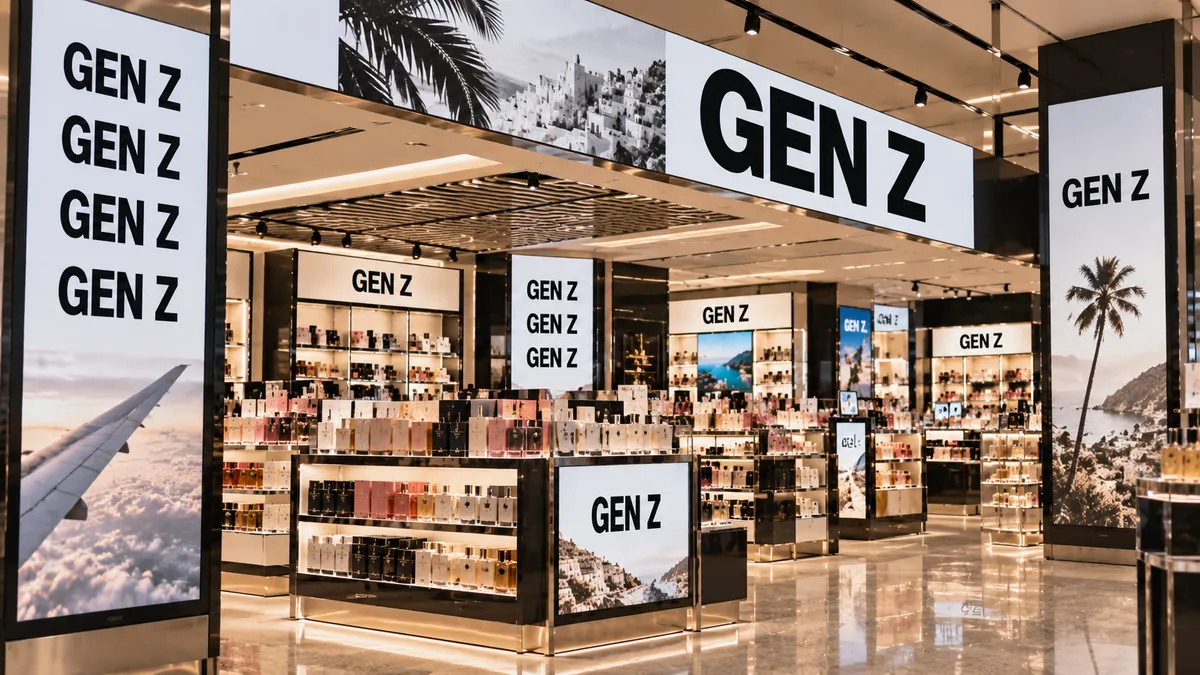

As a Gen Z traveller myself, I think travel retail is so focused on reinventing itself for our generation that it risks overlooking what younger shoppers actually want from duty-free in the first place.
At TFWA Cannes, it was difficult to go a few hours without hearing the phrase ‘Gen Z’. Brands were unveiling exclusives for younger shoppers, workshops were filled with statistics about our spending habits, and brand ambassadors explained how their activations had been created with our generation in mind. Some of what I heard resonated with my own experience, but quite a lot didn't.
The industry's focus is understandable. Oliver Wyman revealed that Gen Z and Millennials already account for 61% of global airline travel spend, a figure projected to reach 81% by 2035. Yet just 36% of Gen Z respondents identified airport duty-free as their preferred shopping channel, compared with 49% of Baby Boomers.
The proposed response has been a more discovery-led, experience-driven retail environment, filled with immersive activations and innovation. Whilst I understood the reasoning, I wondered whether the industry was focusing too heavily on capturing our attention, rather than understanding what actually makes us buy.
What Gen Z actually wants
To explore this, I interviewed fellow Gen Z travellers about what attracts them to duty-free, what puts them off and, most importantly, what persuades them to spend. Although this was a small qualitative study rather than representative research into an entire generation, the responses challenged some of what I'd heard at Cannes.
Of course, Gen Z may discover products through social media, be drawn to new brands and show an interest in different cultures, but that doesn't mean the entire duty-free experience needs reinventing, or that millions must be invested in elaborate activations to persuade us to spend.
My interviews pointed towards simpler purchasing motivations: competitive prices, products unavailable at home, convenience and purchases connected to the destination we're visiting, leaving me with one overarching conclusion: travel retail may be overcomplicating us.
Gen Z still cares about price. A lot.
Oliver Wyman's Global Traveler Survey 2026 suggested Gen Z is less price-driven than older generations, with 51% identifying price as a key purchase criterion compared with 80% of Baby Boomers. However, Dubai Duty Free Managing Director Ramesh Cidambi questioned this interpretation at Cannes, expressing doubts that price was becoming less important despite the growing emphasis on engagement and discovery. My own interviews gave me further reason to question that conclusion.
Despite respondents coming from different socioeconomic backgrounds, price consistently emerged as one of their most important considerations, with affordability often determining whether a purchase happened at all. As one explained:
“While duty-free may be cheaper [than domestic retail], the products themselves can still be unaffordable for younger shoppers. If you could immediately tell that a product was a lot cheaper, or if student discounts were available, I'd be much more likely to buy something.”
Whilst Oliver Wyman's research suggests quality is a greater purchasing priority for Gen Z than price, I would argue the two cannot be considered separately, particularly for students and younger travellers facing financial pressures. It's not simply whether a product is good quality, but whether it's good quality for the price we're paying. We still want to feel we're getting something worthwhile for our money.
Price might not be the reason someone chooses a product, but it can still be the reason they decide not to buy it. Several respondents recalled occasions when prices had prevented them from purchasing in duty-free, whilst most said they would reconsider a purchase if they knew the same product was cheaper at home. And with online price comparisons now so easily accessible, younger shoppers can quickly establish whether duty-free really offers better value.
For travel retail, price competitiveness and clear communication of value matter: if the airport offers an advantage, younger shoppers need to recognise it.
Experiences may attract Gen Z. But do they actually convert us?
Another recurring message at Cannes was that attracting Gen Z requires something different, with immersive experiences and eye-catching activations presented as ways to engage and convert younger shoppers. These can certainly capture our attention, but don't necessarily result in a purchase. One respondent recalled a technology kiosk at Shenzhen Airport featuring small robots that made them stop and look, but didn't persuade them to buy anything. In fact, none of my interviewees recalled purchasing something specifically because of an impressive activation.
That's not to say these experiences are pointless; they can introduce products and make duty-free more enjoyable. However, interest isn't the same as purchase intent, and I think this is where the industry's priorities deserve questioning. Investing in discovery makes sense, but are we giving the same attention to what actually persuades younger shoppers to spend?
More interaction isn't always the answer
My interviews also challenged the emphasis placed on customer interaction at Cannes. Whilst brand ambassadors were presented as central to engagement, several interviewees said being approached by salespeople could discourage them from browsing. As one noted:
“I, like a lot of Gen Z, don't like speaking to staff, and so interaction in stores is actually really off-putting.”
This made me question whether travel retail's definition of engagement reflects how younger shoppers want to shop. When social media has already introduced us to products before we reach the airport, some of us would rather browse and compare independently. Others genuinely enjoy interacting with brand ambassadors, but that's precisely the point: Gen Z doesn't have one preferred shopping experience, and greater interaction isn't always the answer.
The appeal of something you can't get at home
One of the clearest findings from my interviews was the appeal of products unavailable at home. Local snacks, souvenirs and destination-specific products came up repeatedly, both as previous purchases and things respondents would seek out in future.
As one interviewee explained:
“Something local to the destination is more interesting than an ordinary product. I would probably buy something if it was local to where I had been, as it would be a good token of my trip.”
Another enjoyed learning about a country's culture through its food, making local snacks particularly appealing. This highlights one of travel retail's greatest advantages: offering products connected to a destination, giving shoppers a reason to buy something they wouldn't necessarily purchase at home.
This isn't a new idea. Travel retail has been built around exclusivity, gifting and travel-related products for decades, and the arrival of Gen Z doesn't make those advantages any less relevant.
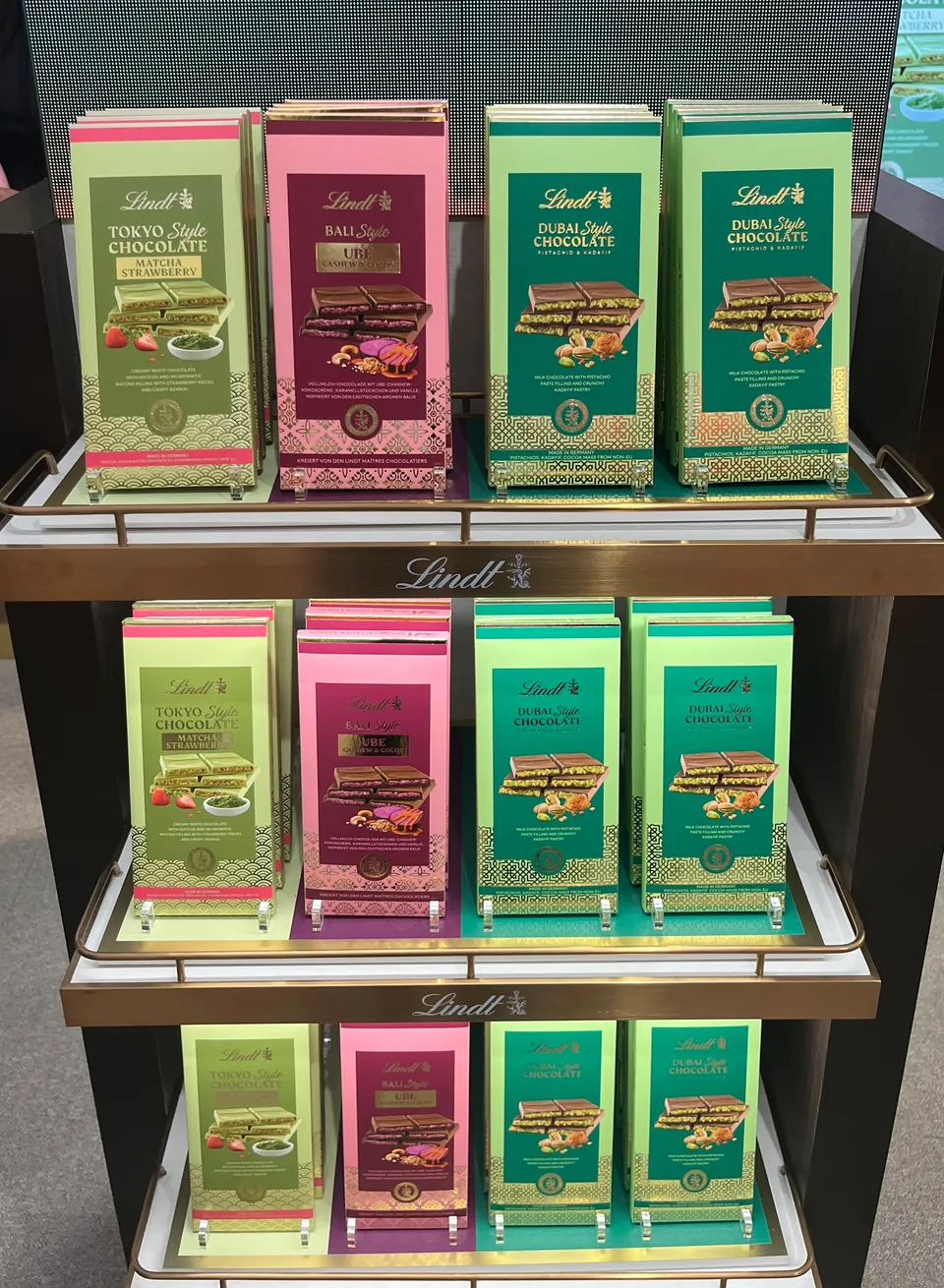
Confectionery offers an interesting example. At Cannes, Lindt showcased destination-inspired varieties, including Tokyo Style with matcha and strawberry, while Toblerone's travel-focused and souvenir-led products showed how familiar brands can connect purchases to a journey.
Through distinctive flavours, local inspiration or memorable gifts, these products offer more than an ordinary chocolate bar. Perhaps the response to Gen Z isn't always a bigger activation, but a product that offers something different from what we can find at home.
Gen Z is not one shopper
I came away from Cannes feeling that some discussions about Gen Z didn't reflect my own experience of duty-free, and speaking to people my age reinforced my belief that the industry risks treating us as a single shopper profile requiring a single new retail formula. Some enjoy immersive experiences and discovering products, whilst others prefer to browse independently or find what they're looking for. No single approach will appeal to an entire generation.
But what struck me most was that the things persuading us to spend aren't particularly new. The industry is investing millions in innovation and elaborate activations to attract younger shoppers, yet my interviews pointed towards the same fundamentals that appealed to generations before us: competitive prices, genuine exclusivity, convenience and products connected to our destinations.
Innovation is exciting and can undoubtedly capture our attention. But capturing our attention and converting us into customers are two different things, and I wonder whether the enthusiasm for reinventing duty-free for Gen Z risks overlooking the fundamentals that are just as important in securing a purchase.
Perhaps travel retail doesn't need to work quite so hard to reinvent itself for Gen Z. It needs to focus just as much on giving us a reason to buy as it does on giving us a reason to stop and look.
Shelftrak Inside Trak Newsletter
Retail execution trends, analysis and data-led intelligence delivered straight to your in-box
Get the latest news and commentary on pricing, compliance, shelf visibility, and execution trends driving category and channel growth worldwide.
· Zero spam · Unsubscribe at any time
Related Reading
11 September 2026
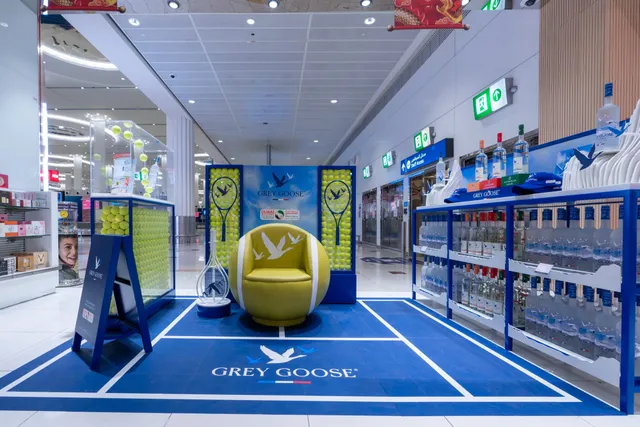
Travel RetailGame, Set, Shelf: why tennis is becoming a significant travel retail opportunity
Major tennis tournaments have evolved into global luxury spectacles, opening high-impact merchandising and activation opportunities for travel retail.

17 August 2026
Travel RetailHow F1 collaborations put travel retail in pole position
Formula One's global reach and luxury appeal are creating unprecedented opportunities for travel retail brands to command premium pricing and connect with shoppers.

18 June 2024
Travel RetailAre Airports Killing Travel Retail with their ‘Passenger Engagement Zones’?
As passengers are drawn to these enticing attractions, are they spending less time—and money—in duty-free stores?