

Africa’s growing role within the global aviation network presents significant opportunities for travel retail, both within and beyond the continent. Moving beyond passenger growth forecasts, this article explores how brands and retailers can translate changing passenger profiles, evolving shopper expectations and emerging purchasing missions into more commercially effective retail strategies.
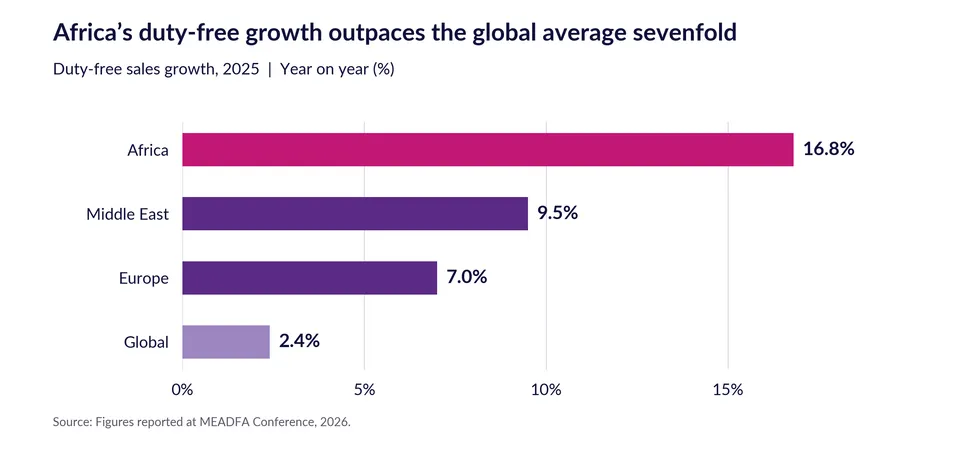
The growth of African duty-free was a significant topic of discussion at this year’s MEADFA Conference. In 2025, sales reached US$1.1bn, with growth of 16.8% considerably outpacing the global average of 2.4%. The opportunity for travel retail extends well beyond African airports, with Amadeus forecasting 12% growth in international departures from the continent in H1 2027.
Whilst much of the conversation surrounding Africa’s growth focuses on expanding aviation capacity and retail infrastructure, equal consideration needs to be given to how the retail offer itself should evolve. As more international travellers visit Africa, African residents travel abroad and diaspora communities reconnect with their countries of heritage, changing passenger dynamics have important implications for the commercial decisions being made at store and shelf level.
Passenger diversity: moving beyond a single retail strategy
A recurring message throughout MEADFA was the importance of recognising the diversity of African markets. Differences in cultures, purchasing power, brand preferences and consumer behaviours have significant implications for retail. Just as there is no single ‘African shopper’, there should be no universal approach to African travel retail. What constitutes a commercially effective assortment in one market may be considerably less relevant in another.
This diversity extends beyond individual markets to the passenger mix within each airport. An international transfer hub such as Addis Ababa serves a different passenger profile to an airport predominantly serving destination-led tourism, creating different commercial priorities for the stores operating within them.
Understanding these differences is particularly important when determining how finite retail space should be allocated. Decisions surrounding which products to list, where to distribute them and how much space to dedicate to them need to reflect not simply the volume of passengers travelling through an airport, but the purchasing opportunities that exist within its particular passenger mix.
Understanding changing shopper expectations
The commercial opportunity associated with Africa’s growth is already becoming apparent at international travel retail hubs. At MEADFA, Dubai Duty Free revealed that sales to Africa-bound passengers exceeded those to Asia Pacific-bound passengers in September 2026, whilst Qatar Duty Free reported that African nationalities’ share of sales had increased from 10.3% to 13.6% year on year.
Capitalising on this opportunity requires a more granular understanding of consumer behaviour within individual African markets. During the Morocco’s Moment panel, speakers described an increasingly digitally informed, value-conscious consumer with higher expectations of retail. These evolving expectations have implications not only for which products retailers stock, but for how they establish a competitive advantage over the other retail environments passengers encounter throughout their journeys.
Assortment and pricing decisions should therefore be closely aligned. Understanding which individual SKUs, flavours and formats perform strongly in passengers’ home markets can help identify where there is an established appetite for particular products. Benchmarking these products against domestic retail and competing airports on both outbound and return journeys can then inform where promotional investment is commercially justified. Applying blanket discounts of 5–15%, without understanding the competitive position of individual products, risks sacrificing margin without creating a compelling incentive to purchase.
Whilst price competitiveness is an important consideration, retailers also need to ensure their assortments are structured to capture the full spending potential of their passenger mix. Recent m1nd-set research found that Egyptian and Moroccan duty-free gift shoppers spend 16% and 12% above the global average respectively. Concentrating promotional investment and shelf space around lower-priced products could therefore mean overlooking opportunities to increase transaction value.
Establishing a clear good–better–best price architecture within individual subcategories enables retailers to offer competitive value whilst creating opportunities for shoppers to trade up. However, this requires more than listing products across different price points. Their relative allocation of space, visibility and differentiation at the shelf will influence how effectively shoppers are encouraged to move between price tiers.
Gifting and discovery: turning passenger insights into retail opportunities
The growing international visibility of African music, fashion, food and creative industries was another significant topic of discussion at MEADFA. As international interest in African cultures grows, travel retail has an opportunity to translate this interest into product discovery. Airports provide a valuable platform for regional brands to reach consumers who may have limited exposure to their products in domestic markets, creating opportunities to extend engagement with the destination beyond the journey itself and establish longer-term brand relationships.
Locally produced products have an important role to play in this. Recent m1nd-set research found that local products appeal to 42% of souvenir and gift-item shoppers globally, compared with 20% across gifting categories. Whilst international visitors may seek products that reflect their experience of a destination, locally produced goods could be particularly meaningful to diaspora communities reconnecting with their countries of heritage. Products that carry cultural significance, evoke familiarity or are difficult to access in their country of residence can offer a compelling reason to purchase.
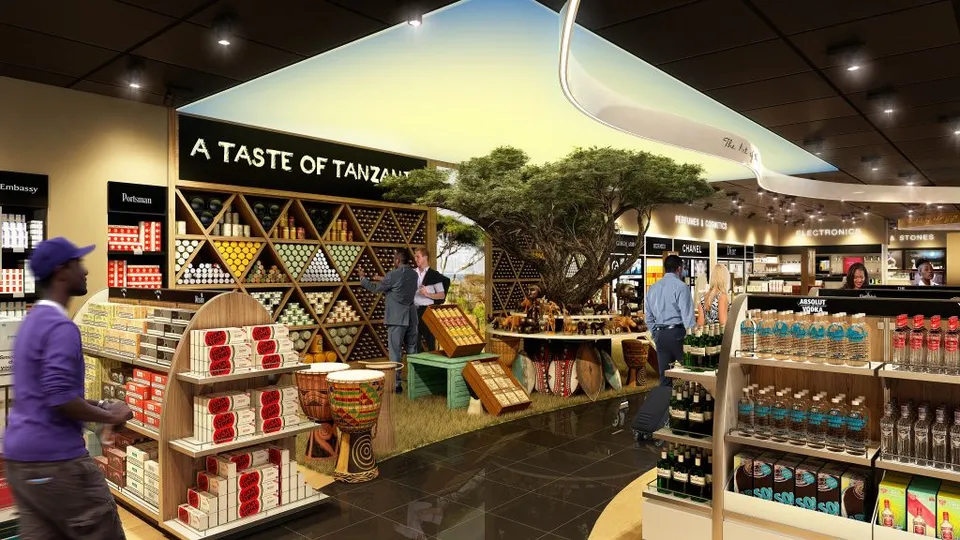
Capitalising on this opportunity requires more than increasing the distribution of regional brands. When locally produced confectionery, spirits and other speciality products are dispersed across conventional category fixtures, they compete for attention primarily on the basis of their product category, rather than the connection to the destination that makes them particularly relevant to certain travellers.
Allocating dedicated space to regional products across categories could change the basis on which shoppers navigate the store and discover products. A traveller interested in exploring a destination’s culture may be encouraged to consider products across several categories, rather than restricting their purchasing decisions to a single department. This creates an opportunity not only to strengthen the visibility of regional brands, but to generate greater commercial value from the space allocated to them.
From passenger intelligence to commercial opportunity
As Africa’s role within the global aviation network continues to grow, one of the most important considerations for travel retailers will be how to accommodate increasingly diverse passenger needs without introducing unnecessary assortment complexity.
Rather than continually adding products to cater to different passenger demographics, retailers should identify where purchasing missions overlap and where they diverge. Products that serve several purchasing missions may warrant greater distribution, space and visibility, whilst more differentiated products can be introduced where there is a distinct commercial opportunity. This enables retailers to respond to changing passenger profiles without unnecessarily fragmenting their assortments or diluting the visibility of commercially important products.
Crucially, identifying a commercial opportunity and being effectively positioned to capture it are two different things. Passenger and shopper intelligence can establish where demand exists, but granular retail intelligence is fundamental to understanding whether the existing offer is equipped to serve it. This requires visibility of assortment, distribution, space, pricing, promotions and product positioning at individual store and SKU level.
Africa’s growth presents an opportunity not simply to expand the travel retail offer, but to reconsider how it is constructed. Capitalising on that growth will depend on how effectively brands and retailers translate their understanding of changing passenger dynamics into measurable improvements in retail execution.
As Africa’s growth reshapes passenger flows across the global aviation network, brands need to establish where their existing retail presence aligns with emerging purchasing opportunities and where gaps in execution could limit their ability to capture them. Request a demo to explore how Shelftrak’s store and product-level intelligence can help inform these decisions.
Shelftrak Inside Trak Newsletter
Retail execution trends, analysis and data-led intelligence delivered straight to your in-box
Get the latest news and commentary on pricing, compliance, shelf visibility, and execution trends driving category and channel growth worldwide.
· Zero spam · Unsubscribe at any time
Related Reading
24 November 2026
Travel RetailAre travel retail stores actually designed for shoppers?
What could the future of travel retail look like if shopper missions played a greater role in how stores are organised?

19 November 2026
Travel RetailAre we building ranges in travel retail for shoppers or for suppliers?
TRunblocked feature: the channel must curate as rigorously as it expands.
18 November 2026
Travel RetailIs travel retail losing sight of the customer journey?
Learn how travel retail brands can connect pre-trip promotions, in-flight advertising and in-store execution to turn traveller interest into purchases.